

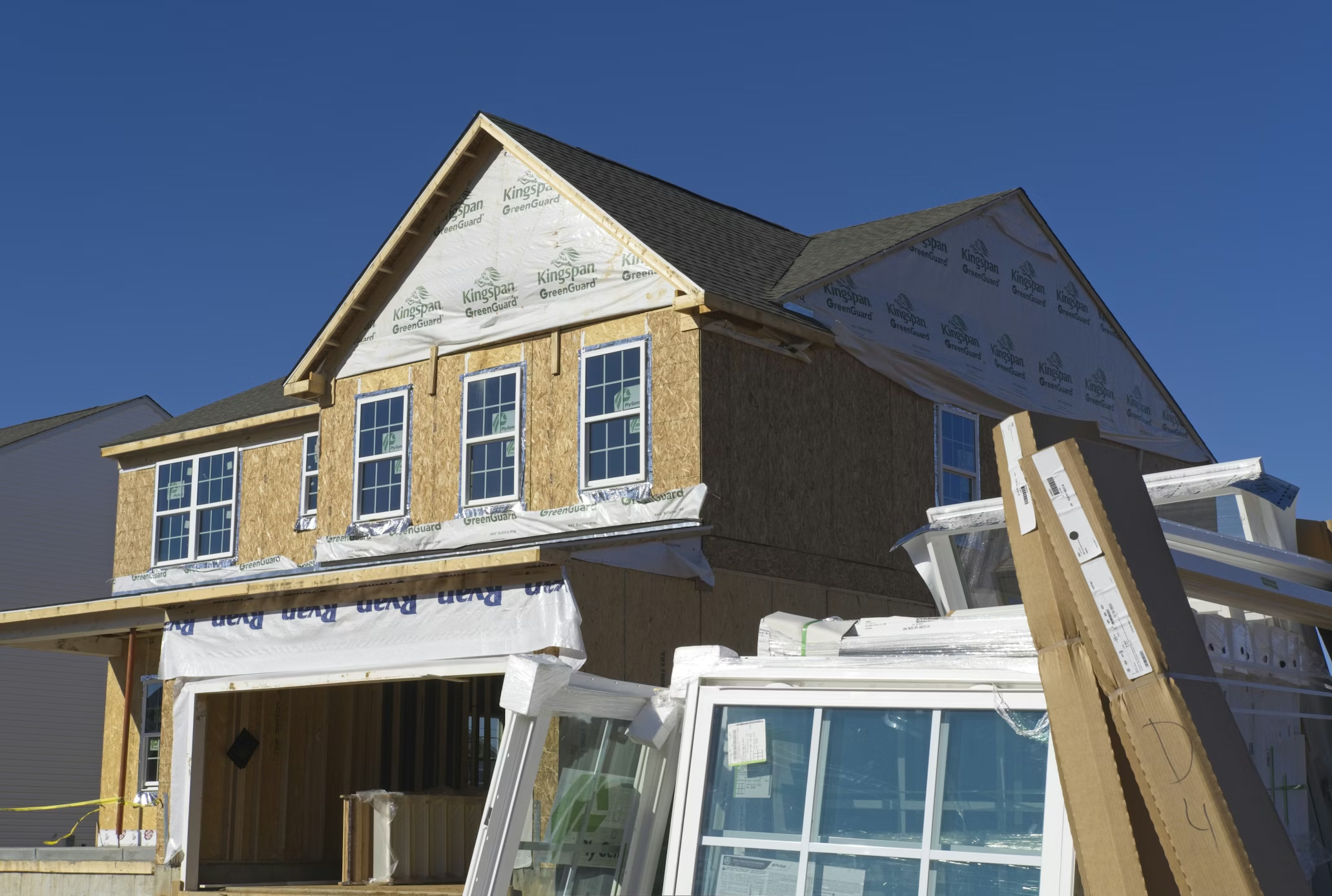
Builder’s Risk insurance protects residential construction projects from losses like fire, theft, vandalism, and weather damage—covering structures, materials on site, and materials in transit. For builders seeking a construction loan, having a builder’s risk policy in place before applying is a standard lender requirement that can also meaningfully speed up the approval process.
Why Get Builder’s Risk Insurance Early
When builder’s risk insurance takes priority, projects move faster.
Builder’s risk insurance, also called course of construction (COC) coverage, is required for a construction loan. And, having it in place before you apply for a construction loan can save you a lot of headaches. Whether you’ve built one home or fifty, the construction loan process has a way of surfacing paperwork you didn’t think to prepare. Most builders expect to gather site plans, budgets, and contractor agreement, but what catches people off guard more often than it should is insurance—specifically, proof of builder’s risk coverage.
The good news is it’s not complicated to get right. And when you do, it can make the lending process smoother.
Protect Your Project from the Ground Up
Designed to cover every stage of your investment.
It’s not a homeowner’s policy (those kick in after the home is finished and occupied), and it’s not a general liability policy for your business. It’s coverage for the project itself—the structure, the materials on site, materials in transit, and materials in temporary storage—while the work is happening.
What builder’s risk insurance covers
- Fire damage to framing or finished work
- Theft of materials or tools from the job site
- Vandalism between work periods
- Wind, hail, or lightning damage
- Damage to scaffolding and temporary structures
- Debris removal costs after a covered loss

Through ViCoverage—Vertical Insure’s platform built specifically for residential builders—coverage limits go up to $2.5M per project, with deductibles ranging from $1,000 to $5,000. One thing worth noting, compared to a lot of standard Builder’s Risk policies, ViCoverage offers higher limits for materials in transit and temporary storage, and better coverage for the kind of acceleration costs that come up when you need to get a project back on schedule after a loss.
Coverage is customized based on project type, value, and timeline—so you’re not paying for a one-size-fits-all policy that doesn’t actually fit the way you build.
How Trusted Insurance Providers Speed Up Loans
A lender is looking to reduce risk and feel confident in your funding.
Builder’s risk coverage is a standard requirement for construction financing. It’s not a formality—it’s what makes it possible for lenders to fund projects with confidence.
By setting up insurance early, lenders can move your project through underwriting faster. There’s no back-and-forth, no waiting on documentation, no delay while someone looks up your insurer and tracks down your policy details. You’re showing up prepared—both for how quickly your loan moves forward and for the impression it makes.
At CoFi, we work with builders at every experience level, and the ones who move through the process most smoothly tend to have the non-negotiables sorted before they apply. Insurance is near the top of that list.
How to Get Covered
If you don’t already have a policy in place, ViCoverage makes it straightforward. You can get a quote online, coverage can be set up quickly, and everything—your active policies, claims process, policy details—live in one customer portal. It’s worth exploring before you break ground, not after.
Once you’re covered, CoFi’s team is ready to walk you through the next steps on construction financing.
Disclaimer: This article is for informational purposes only and does not constitute financial advice, a commitment to lend, or a guarantee of specific loan terms. Actual rates, terms, and approvals depend on individual borrower qualifications, project characteristics, and market conditions.