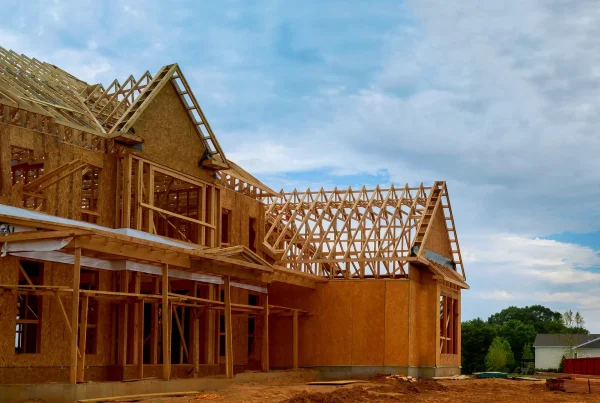


In 2025, understanding loan-to-cost (LTC) vs. loan-to-value (LTV) isn’t just industry jargon—it’s a critical skill for securing leverage and structuring your next real estate project.
In this article, we will dive deep into what you need to know about LTC and LTV and how they can help you finance your next build.
Loan-to-Cost (LTC)
LTC measures the proportion of a project’s development cost that will be financed by debt:
LTC = Loan Amount
Total Project Cost
Why does LTC Matter? Before a property is built, the land alone doesn’t have a clear market value. That’s why lenders use LTC in underwriting to ground potential value, factoring in land, hard costs, soft costs, and contingency.
Market Dynamics in 2025
With construction costs unstable and supply chain risks ongoing, some lenders may take a more conservative stance. Banks now expect developers to bring more equity. What used to be 75–80% LTC is now closer to 65–70%, especially for transitional or new builds.
Example:
Total development cost: $10M
Loan request: $7M
LTC = 70%
This indicates that the sponsor is investing 30% equity — a strong signal of shared risk. However, not all lenders adhere to the same guidelines. Direct lenders like CoFi will approve up to 85% LTC.
Loan-to-Value (LTV)
LTV measures leverage against an appraiser’s estimate of stabilized value:
Loan ÷ Appraised Value
Why does LTV matter? Once a project is stabilized, collateral value drives the lender’s downside protection. A lower LTV means lower recovery risk.
LTV vs LTC: Which Matters Most for Loan Approval?
Appraisal volatility can be a challenge. In some markets, replacement costs exceed current valuations — developers may spend $1.10 to build $1.00 of value. While this makes LTV appear conservative, lenders remain focused on LTC.
Example:
Stabilized value: $12M
Loan: $7M
LTV ≈ 58%
Even at a safe-looking 58% LTV, lenders may weigh the 70% LTC more heavily when sizing commitments.
How Lenders Prioritize in 2025
Today, lenders run both tests and then size the loan to the more conservative ratio. Key dynamics:
- Construction phase: LTC is the binding constraint, since value is speculative until delivery.
- Stabilized phase: LTV governs refinancing, supplemental loans, and take-out financing.
- Equity requirement: Sponsors should expect lenders to demand higher equity injections to buffer cost overruns.
In practice, that means a deal might “work” on paper at a low LTV but still get capped by a high LTC.
Strategic Implications for Sponsors
In 2025, expect lenders to reduce pro forma values and scrutinize construction budgets, line by line. Deals with disciplined LTC and conservative LTV will clear faster with the credit committees.
- Developers: Optimize LTC by managing costs tightly, negotiating guaranteed maximum price (GMP) contracts, and securing favorable land basis. The lower your LTC, the more attractive your capital stack.
- Investors: Focus on LTV at stabilization. A conservative LTV provides refinancing flexibility, improves DSCR coverage, and enables portfolio scaling.
Understanding the Big Picture
LTC and LTV aren’t competing metrics—they’re sequential guardrails:
- LTC rules construction
- LTV rules stabilization
Sophisticated sponsors track both ratios throughout the deal lifecycle, knowing that lender conservatism in 2025 makes equity contributions more critical than ever.
Conclusion
In the more conservative lending environment of 2025, understanding both LTC and LTV ratios is essential for structuring profitable real estate projects. LTC sets the guardrails during construction, while LTV drives refinancing and long-term leverage decisions. Builders who track—and strategically optimize—both ratios will secure financing more efficiently, protect equity, and position their projects for long-term success.
Whether you’re breaking ground or preparing for stabilization, understanding your loan options and mastering these metrics is the key to unlocking capital in today’s market.
Looking for funding for your next project? Contact us to schedule a loan consultation.